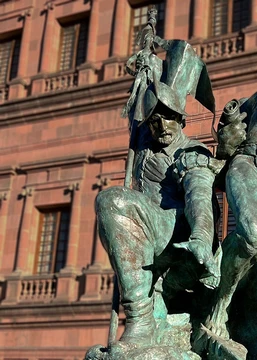
Tristão da Cunha
Portuguese explorer who discovered the Tristan da Cunha islands and participated in the capture of Socotra.

Wikipedia / Wikimedia Commons
Tristão da Cunha (c. 1460 – c. 1540) was a Portuguese explorer and naval commander. He is best known for discovering the remote Tristan da Cunha archipelago in the south Atlantic Ocean, which was later named after him. He also served as an ambassador from King Manuel I of Portugal to Pope Leo X in 1514, leading a lavish embassy that showcased Portuguese conquests.
- known_for
- Discovery of the Tristan da Cunha archipelago; embassy to Pope Leo X; participation in the capture of Socotra
Lore & Background
Tristão da Cunha was born in Portugal around 1460. In 1506, he commanded a fleet of 15 ships sent to the east coast of Africa and India, with his cousin Afonso de Albuquerque leading a squadron. During this voyage, da Cunha discovered a group of remote islands in the south Atlantic, naming the main island after himself, later anglicized to Tristan da Cunha. He then fought the Battle of Barawa against the Ajuran Empire, where he was wounded. In 1507, he participated in the capture of Socotra, a campaign led by Afonso de Albuquerque. After returning to Europe, da Cunha was sent as ambassador to Pope Leo X in 1514, leading a luxurious embassy of 140 persons that paraded exotic animals, including an elephant named Hanno, through Rome. He later became a member of the Portuguese Privy Council. His son Nuno da Cunha became the 9th Governor of Portuguese India in 1529. His tomb is located at the convent of Nossa Senhora da Encarnação in Olhalvo, Portugal.
Reader's Guide
Tristão da Cunha's significance lies primarily in his exploratory and diplomatic achievements. His discovery of the Tristan da Cunha archipelago, though he could not land due to rough seas, gave the islands their enduring name and marked a notable addition to Portuguese geographical knowledge in the South Atlantic. His military actions in East Africa and India, including the capture of Socotra and relief of the Siege of Cannanore, contributed to Portuguese imperial expansion. However, his most famous legacy may be the 1514 embassy to Pope Leo X, a spectacular display of Portuguese wealth and power that featured exotic animals and gifts, symbolizing Portugal's global reach. The embassy's aftermath included the famous Dürer woodcut of an Indian rhinoceros, which became an iconic image. Da Cunha's career reflects the intertwined nature of exploration, warfare, and diplomacy in the Portuguese Empire, though his personal ambition was checked by illness and circumstance.
Did You Know?
- Tristão da Cunha discovered the Tristan da Cunha archipelago but could not land due to rough seas.
- His 1514 embassy to Pope Leo X included an elephant named Hanno that knelt before the pope.
- His son Nuno da Cunha became the 9th Governor of Portuguese India in 1529.
- Tristão da Cunha participated in the capture of Socotra in 1507, a campaign led by Afonso de Albuquerque.
More in Explorers & Conquistadors 1-20
Spotted an error? Know more?
This is a living reference — every entry is fact-audited, and reader corrections feed straight into our audit queue. Suggest an edit · See this site's audit record